Your Mind Is Playing Tricks on You — And You Don't Even Know It
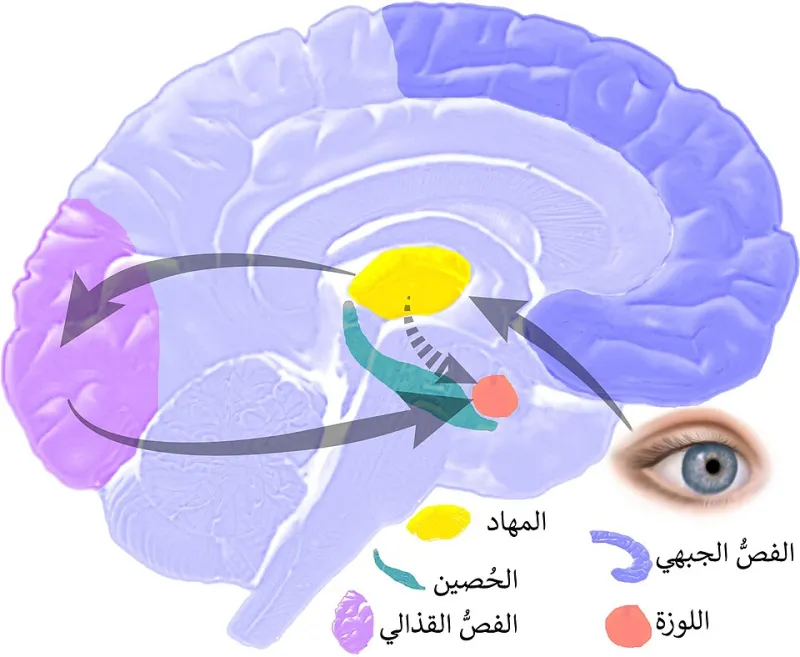
Photo: Original: ManosHacker/Derivative: Alaa Najjar, CC BY-SA 3.0, via Wikimedia Commons
Here's a thought experiment: Have you ever bought a new car — say, a red Honda CR-V — and suddenly started noticing red Honda CR-Vs everywhere? They weren't magically multiplying overnight. They were always there. Your brain just decided they were worth paying attention to.
That little quirk is a window into something much bigger: the way your mind constantly edits reality to match what it already believes. Psychologists call this confirmation bias, and it's one of the most powerful — and sneaky — forces shaping how you see the world around you.
At Lucky Lens Daily, we're all about helping you understand the lens through which you experience life. And honestly? This one's a game-changer.
So, What Exactly Is Confirmation Bias?
In plain terms, confirmation bias is the tendency to search for, interpret, and remember information in a way that confirms what you already think is true. Your brain isn't being lazy — it's actually trying to be efficient. Processing every single piece of incoming data would be mentally exhausting, so your mind creates shortcuts. The problem is that those shortcuts often keep you in a comfortable loop of "I was right all along."
Psychologist Peter Wason first documented this phenomenon back in the 1960s through a simple card-sorting experiment. Participants were given a rule to figure out, and almost universally, they only tested ideas that confirmed the rule they suspected — rather than trying to disprove it. Decades of research since then have shown that this isn't a rare personality flaw. It's a fundamental feature of human cognition. Every single one of us does it.
Politics: The Most Obvious Battlefield
If you want to see confirmation bias in action at full throttle, just watch cable news for an hour — specifically, watch people's reactions to it.
Studies have shown that Americans who identify as conservative tend to prefer Fox News, while those who lean liberal gravitate toward MSNBC or CNN. No huge surprise there. But here's the kicker: research from places like the Pew Research Center has consistently found that people don't just prefer their chosen outlets — they actively distrust and discount information from sources that don't align with their worldview, even when the underlying facts are the same.
During election cycles, this gets especially intense. A voter who believes Candidate A is corrupt will interpret every piece of news about them as further proof of corruption. A supporter of the same candidate will interpret the exact same story as a smear campaign. Same headline, completely opposite takeaways. Two people, two entirely different realities — built from identical raw material.
This isn't about intelligence or education level, by the way. Highly educated people are actually more susceptible in some cases, because they're better at constructing arguments to rationalize their existing beliefs. That's a humbling thought.
Health Decisions You Didn't Know Were Biased
Confirmation bias doesn't just mess with your politics. It can literally affect your health.
Think about someone who's convinced that a particular supplement — let's say high-dose vitamin C — cures colds. Every time they take it and feel better, they credit the supplement. Every time they don't take it and get sick, it confirms they needed it. But when they take it and still get sick? That data point quietly gets filed away as an exception. "I must not have taken it early enough."
This pattern shows up in how people approach medical diagnoses, dietary choices, and even exercise routines. Patients who are skeptical of a diagnosis will seek out second, third, and fourth opinions until they find a doctor who agrees with their preferred conclusion. People who believe a certain diet is working will unconsciously attribute their good days to the diet and their bad days to everything else.
Healthcare providers are not immune either. Studies have shown that doctors can fall into diagnostic momentum — once a patient has been labeled with a condition, subsequent physicians are more likely to accept that label rather than question it, even when new evidence suggests otherwise.
Social Media: A Bias Amplification Machine
If confirmation bias is a fire, social media is a can of gasoline.
Algorithms on platforms like Facebook, Instagram, TikTok, and X (formerly Twitter) are designed to show you more of what you engage with. That sounds harmless — even helpful — until you realize what it actually creates: an echo chamber where your existing beliefs get reflected back at you, louder and louder, with almost no friction from opposing perspectives.
Researchers at MIT found that false news spreads six times faster on Twitter than accurate news, largely because it tends to be more emotionally charged — and emotional content is exactly what confirmation bias loves. If a headline confirms something you already believe or fear, you're far more likely to click, share, and remember it.
The result? A fractured information landscape where millions of Americans are consuming completely different versions of reality — and each of those versions feels 100% true to the person inside it.
Can You Actually Fight It?
Here's the good news: awareness is genuinely half the battle. Once you know confirmation bias exists and understand how it operates, you can start to catch it in action. It takes deliberate effort, but it's absolutely possible to build habits that create a more accurate picture of the world.
A few practical moves that actually help:
Seek out the strongest version of the opposing argument. Not a strawman, but the real deal. If you support a policy, find the most compelling critique of it. If you're skeptical of something, find the most credible case for it. This practice — sometimes called "steel-manning" — forces your brain out of its comfort zone.
Ask yourself what would change your mind. If the answer is "nothing," that's a red flag. Genuine belief in something should be falsifiable. If no possible evidence could shift your view, you're not reasoning — you're rationalizing.
Pause before you share. That article that perfectly captures everything you believe? Read it skeptically. Check the source. Look for what it might be leaving out. The most shareable content is often the most biased.
Diversify your information diet. Not just different outlets, but different formats — long-form journalism, academic summaries, firsthand accounts. The more varied your inputs, the harder it is for any single narrative to dominate.
Seeing Clearly Is a Practice, Not a Destination
Here's the honest truth: you will never fully escape confirmation bias. None of us will. It's baked into the architecture of human cognition, and pretending otherwise would itself be a form of bias — the belief that you're the rare, objective thinker.
But that doesn't mean you're stuck. Every time you pause to question a snap judgment, every time you genuinely engage with an uncomfortable piece of information, every time you update your view based on evidence rather than emotion — you're sharpening your lens.
And in a world that's constantly trying to tell you what to see, that kind of clarity is worth fighting for.