Your Brain Sees Patterns Everywhere — That's Both Its Greatest Gift and Its Biggest Trap
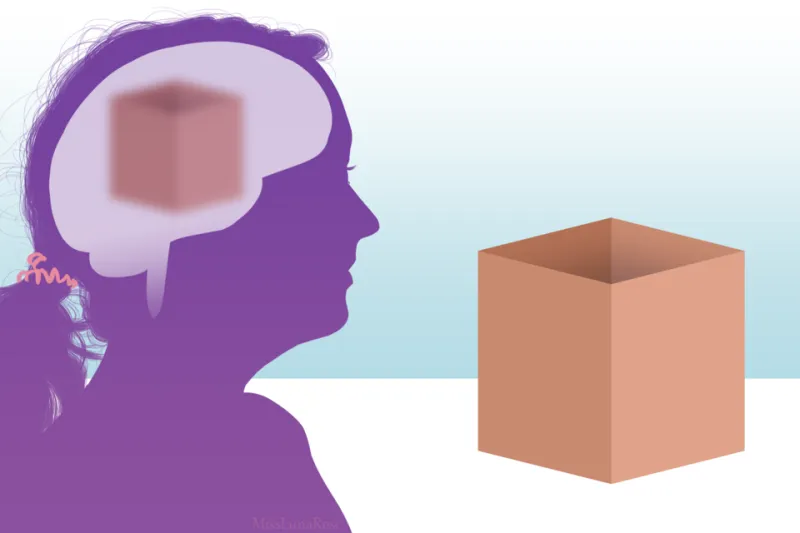
Photo: MissLunaRose12, CC BY-SA 4.0, via Wikimedia Commons
You notice that every time you wear a certain shirt to a job interview, things go well. A friend swears the stock market always dips on Tuesdays. Your coworker is convinced she can tell when her boss is about to give bad news based on how he holds his coffee mug.
Are these people onto something real — or just connecting dots that were never meant to be connected?
The answer is more complicated than a simple yes or no, and understanding it might be one of the most useful things you can do for your decision-making.
Why Your Brain Is a Pattern Machine
Pattern recognition isn't a quirk or a flaw. It's arguably the core function of human cognition — the thing that allowed our ancestors to survive in genuinely dangerous environments. Recognizing that a particular sound meant a predator was nearby, or that certain weather patterns preceded storms, wasn't a nice-to-have skill. It was life or death.
The brain became extraordinarily good at this over hundreds of thousands of years. So good, in fact, that it developed a strong bias toward finding patterns even when the data is sparse or noisy. Scientists call this tendency apophenia — the experience of seeing meaningful connections between unrelated things. A related, more familiar term is pareidolia, which is why you see faces in clouds or wood grain.
This system operates largely below conscious awareness. You don't decide to look for patterns. Your brain just does it, constantly, and then presents you with the conclusions as if they were obvious facts.
When Pattern Recognition Is Genuinely Useful
Before we get too critical of this mental habit, it's worth acknowledging how powerful it can be when it's working correctly.
Experienced emergency room physicians often describe a gut feeling that something is wrong with a patient before they can articulate exactly why. Research into expert intuition — most famously by psychologist Gary Klein — suggests this isn't mystical. It's pattern recognition operating at high speed, drawing on thousands of prior cases stored in memory.
The same dynamic shows up in business. Experienced investors often describe sensing that something is off about a company's financials before they've done a full analysis. Veteran teachers recognize early signs of a struggling student that newer instructors miss. These aren't lucky guesses — they're pattern libraries built through years of deliberate observation.
In careers and relationships, pattern recognition helps us make faster, often accurate judgments. Noticing that a workplace has high turnover, that a potential partner becomes defensive when asked simple questions, or that a client consistently moves goalposts — these observations are patterns worth trusting, especially when they're grounded in repeated, observable behavior.
When It Goes Wrong — And It Goes Wrong a Lot
Here's where things get tricky. The same system that enables expert intuition also produces some spectacularly bad decisions.
In investing, this shows up as the hot hand fallacy — the belief that a stock or fund that's been performing well will continue to do so, simply because it has been. Studies consistently show that past performance in individual stocks does not reliably predict future results, yet investors pour money into recent winners with striking regularity.
In relationships, we often pattern-match new people to old ones in ways that aren't fair or accurate. Someone who shares a few traits with an ex gets unconsciously evaluated through that lens — for better or worse — before they've had a real chance.
In careers, confirmation bias (a close cousin of pattern recognition) leads people to notice information that confirms what they already believe and filter out what doesn't. If you've decided a particular industry is dying, you'll keep finding evidence that supports that view, even if the full picture is more nuanced.
The troubling part is that false patterns feel exactly like real ones. Your brain doesn't flag its own errors. Confidence in a wrong conclusion can feel identical to confidence in a right one.
Four Questions to Tell the Difference
So how do you actually distinguish genuine insight from coincidental pattern-matching? There's no perfect test, but these questions can help slow down the process and add some useful friction:
1. How many data points am I actually working with? A pattern based on two or three instances is almost always too thin to trust. Our brains love to generalize from small samples. If you've noticed something happen twice, that's interesting — but it's not a pattern yet.
2. Am I looking for this pattern, or did it find me? Patterns you went looking for are more suspect than ones you stumbled across unexpectedly. If you're motivated to find a connection — because it confirms something you want to believe, or because it would justify a decision you've already made — apply extra skepticism.
3. Can I think of clear exceptions? A genuine pattern should be reasonably consistent. If you have to do a lot of mental work to explain away the exceptions, that's a sign you might be forcing the fit.
4. What would a skeptic say? Imagine someone whose job is to poke holes in your reasoning. What alternative explanations would they offer? If you can't come up with at least one plausible alternative, you might not be thinking broadly enough.
Living With an Imperfect Superpower
The goal here isn't to stop trusting your instincts. Pattern recognition is a feature, not a bug — and trying to override it entirely would leave you paralyzed by analysis. The goal is to become a better editor of your own conclusions.
Some of the most effective decision-makers aren't people who've eliminated intuition from their process. They're people who've learned to use it as a first draft rather than a final answer. They let their pattern-spotting brain generate a hypothesis, and then they subject that hypothesis to a bit of deliberate scrutiny before acting on it.
That pause — even a small one — is often enough to catch the mistakes. And the times it confirms your instinct? Those moments tend to feel a lot more like earned clarity than blind luck.